
Strapi CMS websites

The deepest-ownership CMS build: Strapi is open source and runs on infrastructure you control, behind a front end in code you own. Nothing about your website - not the code, not the content, not the CMS itself - lives on someone else's platform.

[ Who it's for ]

Teams that want ownership all the way down.

Strapi fits teams that want a real editorial interface - roles, drafts, review states, structured content types - without handing their content to a hosted vendor. Because it is open source and self-hosted, the CMS itself is yours: your database, your infrastructure, your rules on who can touch what. It is particularly strong for multi-language operations, with locale handling built in rather than priced per market.

The honest counter-cases: if your team is a handful of marketers shipping pages, you likely do not need a CMS at all, and [Agentic websites] is simpler to own. If you want structured content with a hosted backend nobody on your side ever maintains, look at Sanity CMS websites.

The umbrella page, Headless CMS websites, carries the full how-to-choose conversation.

[ What’s included ]

Strapi done properly,
inside the full system.

The deepest-ownership CMS build: the code, the content and the CMS itself all run on infrastructure in your name.

  • Strapi 5, self-hosted in your name.

    Your accounts, your billing, your access control, on infrastructure you control. Handover means handover: nothing about the CMS lives on someone else’s platform.

  • A front end in your repository.

    The site in your GitHub repository, under your name, from the first commit, built on the same foundation as every Signal Studio build.

  • Content architecture for your operation.

    Content types, roles and granular permissions, draft and publish workflow, and locales, planned for how your team actually works rather than assembled ad hoc.

  • The agent layer on top.

    Editorial content flows through Strapi; the site itself still changes by plain-language brief to your agent, with a preview before anything ships.

  • The guardrails and the machine layer.

    A structured brand.md and our standards encoded as the rules every change renders inside, with structured data and llms.txt fed by the same content.

  • Editors trained, admins documented.

    Training for the editorial team, and the unglamorous parts set up and written down: backups, recovery and permissions, so running it is never guesswork.

  1. Discovery
  2. Transform
  3. Run & grow

[ Proof ]

Built for SaaS teams like yours.

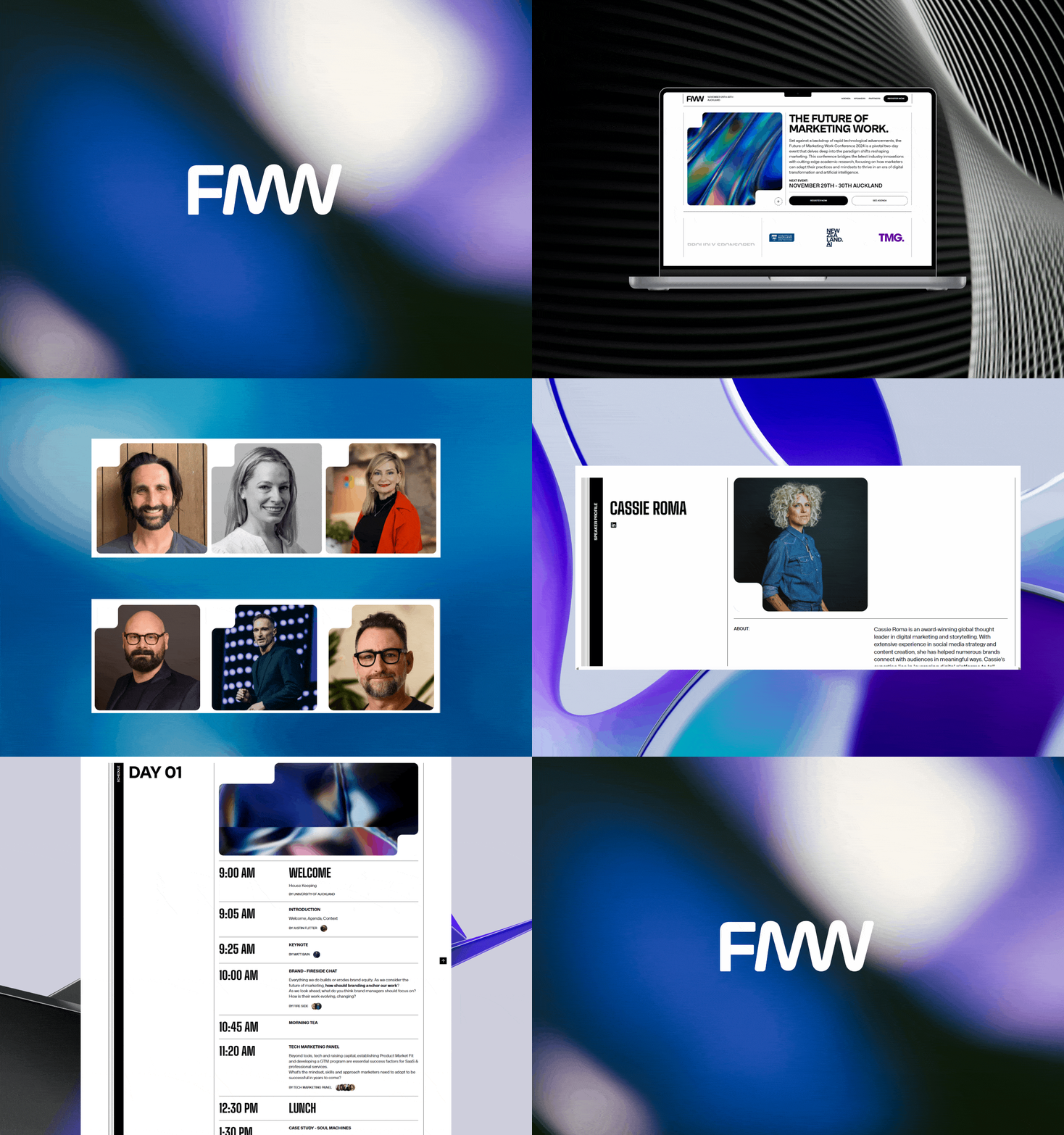
  • [ 01/ Future of Marketing Work ]

    A brand and website for a three-way event.

    A brand, website and print system for a collaboration between academia, industry and the AI community, delivered in an eight-week sprint.

    The FMW mark on a blue and violet blur.

[ Related services ]

Other ways we build.

[ Questions we hear most ]

The honest answers.

Rheed MacPherson, founder of Signal Studio

Can’t find your answer?

Book a Discovery call and ask us directly.

Book a Discovery call
Strapi or Sanity?

Strapi when self-hosting and control matter most: your database, your infrastructure, locale handling without per-market pricing. Sanity when you want a hosted backend and real-time collaboration and are happy with a vendor running it. Both stay components behind code you own; the roadmap that comes out of Discovery makes the call for your team, with the reasoning attached.

Who hosts it, and what does running it involve?

Strapi runs on client-dedicated infrastructure in your name; we set it up, document it, and hand over the keys, including backups and recovery. If we stay on after launch, we keep it maintained; if not, any competent developer can, because nothing in the setup is proprietary to us.

Can our marketers use it without developers?

Yes. Editors get a clean admin with exactly the permissions they need: content roles that cannot touch settings or structure, drafts and review before publish. The riskier surface, changing the site itself, goes through the agent workflow with a preview and your approval.

We are on WordPress or Webflow now. How does content get into Strapi?

Exported, converted, and landed as structured content: same shape, better home, nothing retyped. Rankings are protected with a per-URL redirect plan. The migrations overview shows how the move runs.

What does it cost to run compared to a hosted CMS?

Infrastructure instead of subscription: you pay for hosting you control rather than seats you rent, and the bill does not grow with your team. We put the numbers side by side in the roadmap so the arithmetic, not the doctrine, decides.

Rheed MacPherson, founder of Signal Studio

Can’t find your answer?

Book a Discovery call and ask us directly.

Book a Discovery call
Signal Studio
Book a Discovery call
STRAPI.MD STRAPI

# Strapi CMS websites


Strapi websites for teams that want full ownership: an open-source CMS on infrastructure you control, behind a fast front end your marketing team can run.


## Strapi CMS websites


The deepest-ownership CMS build: Strapi is open source and runs on infrastructure you control, behind a front end in code you own. Nothing about your website - not the code, not the content, not the CMS itself - lives on someone else's platform.


- [Book a discovery call](/contact/)

// Who it's for

## Teams that want ownership all the way down.


Strapi fits teams that want a real editorial interface - roles, drafts, review states, structured content types - without handing their content to a hosted vendor. Because it is open source and self-hosted, the CMS itself is yours: your database, your infrastructure, your rules on who can touch what. It is particularly strong for multi-language operations, with locale handling built in rather than priced per market.

The honest counter-cases: if your team is a handful of marketers shipping pages, you likely do not need a CMS at all, and [Agentic websites] is simpler to own. If you want structured content with a hosted backend nobody on your side ever maintains, look at Sanity CMS websites.

The umbrella page, Headless CMS websites, carries the full how-to-choose conversation.


- [Sanity CMS websites](/services/sanity/)

- [Headless CMS websites](/services/headless-cms/)

// What’s included

## Strapi done properly, inside the full system.


The deepest-ownership CMS build: the code, the content and the CMS itself all run on infrastructure in your name.


- Strapi 5, self-hosted in your name.

Your accounts, your billing, your access control, on infrastructure you control. Handover means handover: nothing about the CMS lives on someone else’s platform.


- A front end in your repository.

The site in your GitHub repository, under your name, from the first commit, built on the same foundation as every Signal Studio build.


- Content architecture for your operation.

Content types, roles and granular permissions, draft and publish workflow, and locales, planned for how your team actually works rather than assembled ad hoc.


- The agent layer on top.

Editorial content flows through Strapi; the site itself still changes by plain-language brief to your agent, with a preview before anything ships.


- The guardrails and the machine layer.

A structured brand.md and our standards encoded as the rules every change renders inside, with structured data and llms.txt fed by the same content.


- Editors trained, admins documented.

Training for the editorial team, and the unglamorous parts set up and written down: backups, recovery and permissions, so running it is never guesswork.


- Discovery

- Transform

- Run & grow


// Proof

## Built for SaaS teams like yours.


Read case study


- [Future of Marketing Work](/case-studies/future-of-marketing/)

A brand and website for a three-way event.


A brand, website and print system for a collaboration between academia, industry and the AI community, delivered in an eight-week sprint.


// Related services

## Other ways we build.


- Agentic websites

Our flagship. A marketing website your team runs with its own agent. Best for: teams ready to brief a change and ship it the same day.


- [Agentic websites](/services/agentic-websites/)

- Webflow websites

Built to your design, not the nearest template. Best for: design-led teams who want a visual editor they already know.


- [Webflow websites](/services/webflow/)

- Astro websites

The framework under our builds: fast, server-rendered, readable by machines. Best for: teams who want to know exactly what they’d own.


- [Astro websites](/services/astro/)


// Questions we hear most

## The honest answers.


- Strapi or Sanity?

Strapi when self-hosting and control matter most: your database, your infrastructure, locale handling without per-market pricing. [Sanity](/services/sanity/) when you want a hosted backend and real-time collaboration and are happy with a vendor running it. Both stay components behind code you own; the roadmap that comes out of Discovery makes the call for your team, with the reasoning attached.


- Who hosts it, and what does running it involve?

Strapi runs on client-dedicated infrastructure in your name; we set it up, document it, and hand over the keys, including backups and recovery. If we stay on after launch, we keep it maintained; if not, any competent developer can, because nothing in the setup is proprietary to us.


- Can our marketers use it without developers?

Yes. Editors get a clean admin with exactly the permissions they need: content roles that cannot touch settings or structure, drafts and review before publish. The riskier surface, changing the site itself, goes through the agent workflow with a preview and your approval.


- We are on WordPress or Webflow now. How does content get into Strapi?

Exported, converted, and landed as structured content: same shape, better home, nothing retyped. Rankings are protected with a per-URL redirect plan. The [migrations overview](/migrate/) shows how the move runs.


- What does it cost to run compared to a hosted CMS?

Infrastructure instead of subscription: you pay for hosting you control rather than seats you rent, and the bill does not grow with your team. We put the numbers side by side in the roadmap so the arithmetic, not the doctrine, decides.


- Can’t find your answer?

Book a Discovery call and ask us directly.

- [Book a Discovery call](/contact/)

Or email hello@signalstudio.co.nz