
Astro websites

Astro is the framework built for exactly what a marketing site is: content-first, extremely fast, and server-rendered for the machines now reading on your buyers' behalf. It is what we build on, including the page you are reading: code we own, with the agent layer running.

[ Who it's for ]

Teams who searched by stack and want it done properly.

If you are here, you probably already know why Astro: sites that ship almost no JavaScript by default, load fast everywhere, and render on the server so every reader, human or machine, gets the full content without executing anything. You may have a developer who recommended it, or a performance audit that pointed here.

What we add to the framework choice is everything around it: the ownership model, the agent operations, the machine layer, and the testing. Astro is our default stack because it serves those ends better than anything else for marketing sites; the framework is the means.

If you are earlier in the decision, start with the whole picture - or with content operations, if that is what the question is really about.

[ What’s included ]

Astro underneath,
the full system on top.

The framework built for what a marketing site is, carrying everything a Signal Studio build carries.

  • The keys, in your repository.

    An Astro front end in your GitHub repository, under your name. Modern, documented and free of exotic dependencies, so any competent developer could pick it up, which is the point of owning it.

  • Speed as a feature, not a boast.

    Server-rendered pages, near-zero JavaScript by default, and media through the asset pipeline. Fast for the people reading, and fully legible to machines in a single fetch.

  • The machine layer, native.

    Structured data, llms.txt, clean sitemaps and content negotiation. Astro’s server rendering makes the machine audience a first-class citizen rather than an afterthought.

  • Your agent ships the site.

    Content sits in the repository next to the code, changed by plain-language brief to the agent your team already uses, and previewed before it ships. The repo is the CMS.

  • A CMS when you genuinely need one.

    Astro pairs cleanly with Strapi or Sanity on the same foundation, for teams with an editorial operation to run. The choosing logic lives on Headless CMS websites.

  • Testing from day one.

    Split runs on your own site with no third-party tags in the path. Changes start as hypotheses and end as measured results, so the site keeps earning its place.

  1. Discovery
  2. Transform
  3. Run & grow

[ Proof ]

We run our business on it.

This site is an Astro build operated exactly as described - content in the repository, agent-run inside guardrails, experiments live on the page you are reading. Flip the mode toggle in the corner and read it the way a machine does.

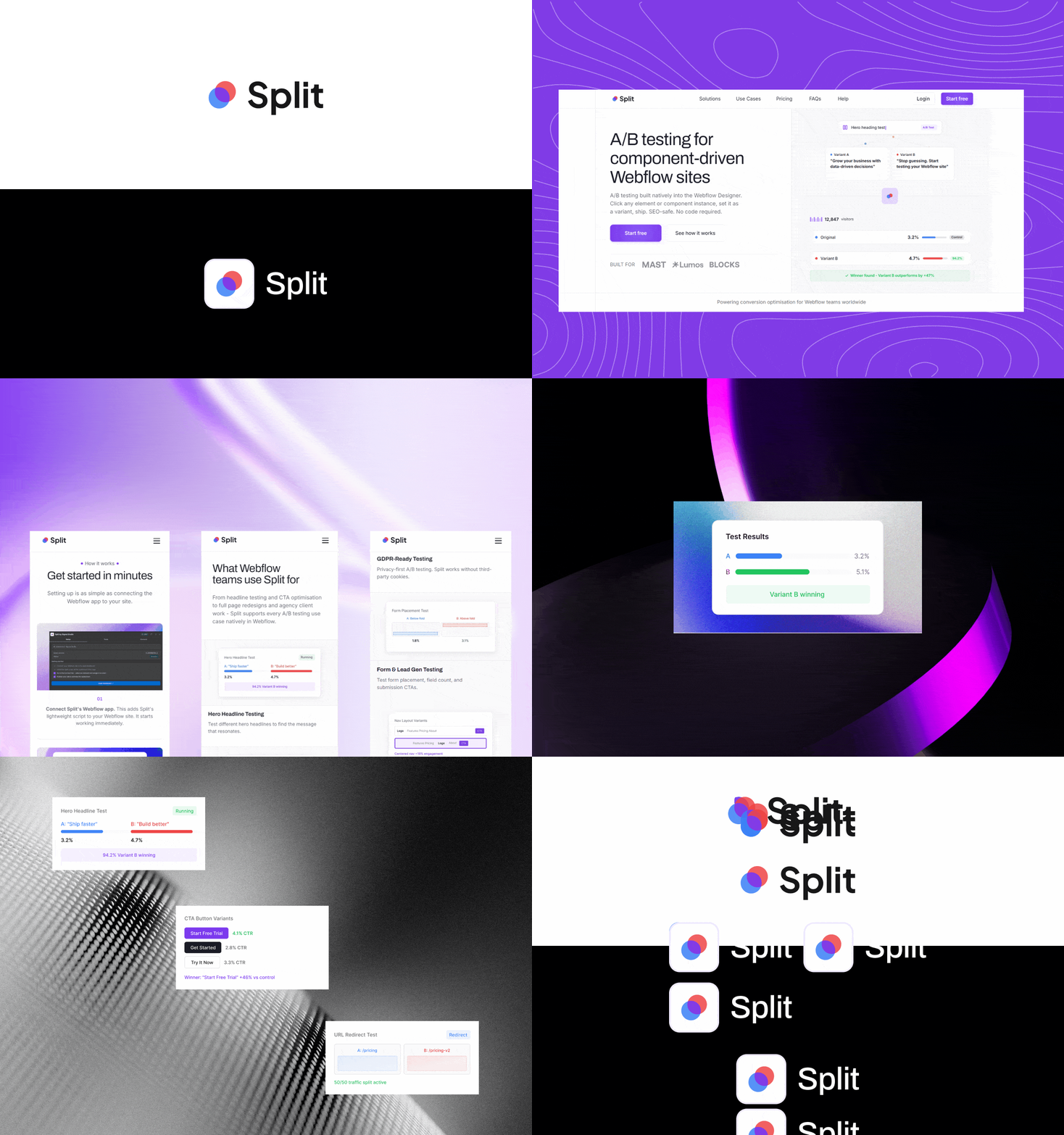
  • [ 01/ Split ]

    The A/B testing tool we built for Webflow.

    “Every A/B testing tool we tried fought Webflow instead of working with it. So we built one that doesn't.”
    Rheed MacPherson Founder
    The Split site on a tablet resting on dark concrete.

[ Related services ]

Other ways we build.

[ Questions we hear most ]

The honest answers.

Rheed MacPherson, founder of Signal Studio

Can’t find your answer?

Book a Discovery call and ask us directly.

Book a Discovery call
Why Astro and not Next.js or another framework?

For marketing sites, Astro's defaults are the right defaults: content-first pages, server rendering, and JavaScript only where a page genuinely needs it, which is why the speed shows up without heroics. Next.js is a fine framework whose centre of gravity is applications. We picked the tool shaped like the job; if your site is genuinely an application, we will say so in Discovery rather than force the default.

Is Astro a platform we would be locked into?

No, and the distinction matters. Astro is an open-source framework: it is code in your repository, not a service you rent. There is no plan tier, no seat pricing, and no company that can change the rules of your website. Swapping frameworks years from now would be a rebuild decision you own, not an exit negotiated with a landlord.

Can Astro work with our CMS?

Yes. Astro is CMS-agnostic: we run it with content in the repository by default, and with Strapi or Sanity when an editorial operation wants one. How to choose is on the Headless CMS websites page.

Does Astro help with AI search?

Meaningfully, yes. Server-rendered pages mean the full content is in the response, no JavaScript execution required, which is how most machine readers consume the web. That is the floor; the ceiling is the deliberate machine layer we build on top: structured data, llms.txt and crawler policy.

Can our own developers work on it after handover?

That is half the point of the stack choice: Astro is widely used, well documented, and unexotic. Your repository, standard tooling, no proprietary layer of ours in the way. We hand over the keys and stay because you want us, not because you are stuck.

Rheed MacPherson, founder of Signal Studio

Can’t find your answer?

Book a Discovery call and ask us directly.

Book a Discovery call
Signal Studio
Book a Discovery call
ASTRO.MD ASTRO

# Astro websites


We build marketing websites on Astro: content-first, fast and server-rendered, so search engines and the AI systems your buyers use can read every page.


## Astro websites


Astro is the framework built for exactly what a marketing site is: content-first, extremely fast, and server-rendered for the machines now reading on your buyers' behalf. It is what we build on, including the page you are reading: code we own, with the agent layer running.


- [Book a discovery call](/contact/)

// Who it's for

## Teams who searched by stack and want it done properly.


If you are here, you probably already know why Astro: sites that ship almost no JavaScript by default, load fast everywhere, and render on the server so every reader, human or machine, gets the full content without executing anything. You may have a developer who recommended it, or a performance audit that pointed here.

What we add to the framework choice is everything around it: the ownership model, the agent operations, the machine layer, and the testing. Astro is our default stack because it serves those ends better than anything else for marketing sites; the framework is the means.

If you are earlier in the decision, start with the whole picture - or with content operations, if that is what the question is really about.


- [Agentic websites](/services/agentic-websites/)

- [Headless CMS websites](/services/headless-cms/)

// What’s included

## Astro underneath, the full system on top.


The framework built for what a marketing site is, carrying everything a Signal Studio build carries.


- The keys, in your repository.

An Astro front end in your GitHub repository, under your name. Modern, documented and free of exotic dependencies, so any competent developer could pick it up, which is the point of owning it.


- Speed as a feature, not a boast.

Server-rendered pages, near-zero JavaScript by default, and media through the asset pipeline. Fast for the people reading, and fully legible to machines in a single fetch.


- The machine layer, native.

Structured data, llms.txt, clean sitemaps and content negotiation. Astro’s server rendering makes the machine audience a first-class citizen rather than an afterthought.


- Your agent ships the site.

Content sits in the repository next to the code, changed by plain-language brief to the agent your team already uses, and previewed before it ships. The repo is the CMS.


- A CMS when you genuinely need one.
Astro pairs cleanly with Strapi or Sanity on the same foundation, for teams with an editorial operation to run. The choosing logic lives on Headless CMS websites.


- Testing from day one.

Split runs on your own site with no third-party tags in the path. Changes start as hypotheses and end as measured results, so the site keeps earning its place.


- Discovery

- Transform

- Run & grow


// Proof

## We run our business on it.


This site is an Astro build operated exactly as described - content in the repository, agent-run inside guardrails, experiments live on the page you are reading. Flip the mode toggle in the corner and read it the way a machine does.

 

Read case study


- [Split](/case-studies/split/)

The A/B testing tool we built for Webflow.


// Related services

## Other ways we build.


- Agentic websites

Our flagship. A marketing website your team runs with its own agent. Best for: teams ready to brief a change and ship it the same day.


- [Agentic websites](/services/agentic-websites/)

- Headless CMS websites

The same foundation, with a familiar editor on top. Best for: teams where some people live in their agents and others want a CMS.


- [Headless CMS websites](/services/headless-cms/)

- Webflow websites

Built to your design, not the nearest template. Best for: design-led teams who want a visual editor they already know.


- [Webflow websites](/services/webflow/)


// Questions we hear most

## The honest answers.


- Why Astro and not Next.js or another framework?

For marketing sites, Astro's defaults are the right defaults: content-first pages, server rendering, and JavaScript only where a page genuinely needs it, which is why the speed shows up without heroics. Next.js is a fine framework whose centre of gravity is applications. We picked the tool shaped like the job; if your site is genuinely an application, we will say so in Discovery rather than force the default.


- Is Astro a platform we would be locked into?

No, and the distinction matters. Astro is an open-source framework: it is code in your repository, not a service you rent. There is no plan tier, no seat pricing, and no company that can change the rules of your website. Swapping frameworks years from now would be a rebuild decision you own, not an exit negotiated with a landlord.


- Can Astro work with our CMS?

Yes. Astro is CMS-agnostic: we run it with content in the repository by default, and with [Strapi](/services/strapi/) or [Sanity](/services/sanity/) when an editorial operation wants one. How to choose is on the [Headless CMS websites](/services/headless-cms/) page.


- Does Astro help with AI search?

Meaningfully, yes. Server-rendered pages mean the full content is in the response, no JavaScript execution required, which is how most machine readers consume the web. That is the floor; the ceiling is the deliberate machine layer we build on top: structured data, llms.txt and crawler policy.


- Can our own developers work on it after handover?

That is half the point of the stack choice: Astro is widely used, well documented, and unexotic. Your repository, standard tooling, no proprietary layer of ours in the way. We hand over the keys and stay because you want us, not because you are stuck.


- Can’t find your answer?

Book a Discovery call and ask us directly.

- [Book a Discovery call](/contact/)

Or email hello@signalstudio.co.nz