
[ Migrations ]

Move your site onto code you own

Your design kept, your rankings protected, and a site your team runs with its own agent on the other side. We lift marketing sites off rented platforms and into your own repository, and your current site stays live until the new one takes over.

[ From where ]

Where are you moving from?

[ Who it’s for ]

Your team made the jump to AI.
Your platform is holding the website back.

The platforms did their job. They let a marketing team run a site without developers, and for a long time that was the best trade on offer. Three things have changed it.

  • Your agent is a guest, not an editor.

    Platforms were built for a marketer clicking around a visual editor. Your agent doesn’t work that way. It wants to read the files and change them. An MCP or an API lets it reach in, but it’s an agent working through a keyhole: it can’t see the whole site, can’t run it, can’t check its own work before it ships.

  • The bill grows with the team.

    Seats, plan tiers and item limits mean the cost of shipping climbs with every marketer you add. On code you own it stays flat.

  • Leaving gets harder every year you wait.

    Every page built inside a platform is a page that has to be carried out of it. The move is at its smallest today.

[ What’s included ]

The same care, whatever the platform.

  • Rankings protected.

    A per-URL redirect plan, metadata carried over, and rankings watched through cutover. Moving platforms doesn’t have to mean starting over with search engines, and we treat every ranking as something you paid for.

  • Design largely kept.

    A migration is not a redesign. What you’ve invested in comes with you, rebuilt as a component library. Everything underneath it is replaced.

  • Cutover with a net.

    Staged on a preview, switched over with the redirects live and a rollback ready. Your current site keeps running until the moment the new one takes over, and moving off a platform doesn’t mean a publishing freeze.

  • The full system on the other side.

    Every migration lands on the same foundation as a new build: the keys to your own GitHub repository, your agent shipping changes on a preview, your brand encoded, our standards in the rails, the machine layer, and your team trained to run it.

  1. Discovery
  2. Transform
  3. Run & grow

[ The CMS question ]

Do you have to leave your CMS?

No. The non-negotiable in a migration is ownership: the code and the content, in your repository, under your name. Where the content is edited is a choice inside that.

Our default, and what we recommend for most marketing sites, is content in the repository next to the code. The repo is the CMS. It is what lets your agent work on the whole site, and it means no CMS subscription: no seats, no content held in a vendor’s system, nothing between your agent and your words.

But some teams genuinely suit a headless CMS on the same foundation: some people live in their agents and others want a familiar editor, an editorial team publishes most days, or you publish across languages or markets. Then editors publish through the CMS, the marketers working with agents work through the repo, and it’s still one site with one set of rules. Sometimes the right move is keeping your content exactly where it is while we rebuild what’s underneath it.

[ Recent work ]

Built for SaaS teams like yours.

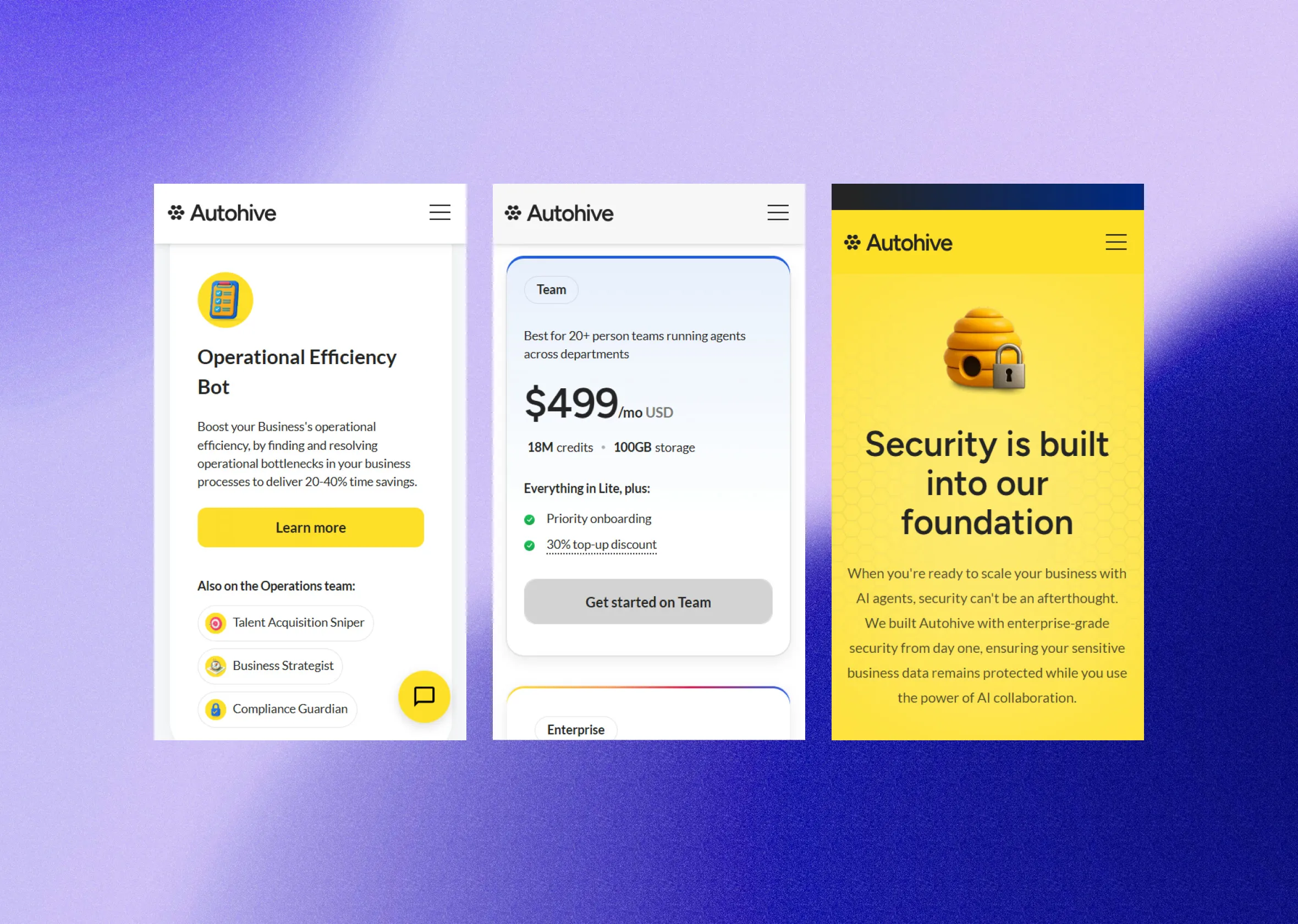
  • Three Autohive app screens on a violet gradient: an efficiency bot, a plan, and the security page. Autohive: a website that keeps pace with their marketing teamAn AI-agent company's first website, built on a component framework their designers, marketers and agents could all work in, so their marketing team builds its own landing pages and updates without waiting on anyone.Read more
  • The FMW mark on a blue and violet blur. Future of Marketing Work: a brand and website for a three-way eventAn Auckland event on how marketers adapt to digital transformation and AI, brought together by a university, the AI community and an events group. We made the brand, the website and the print.Read more
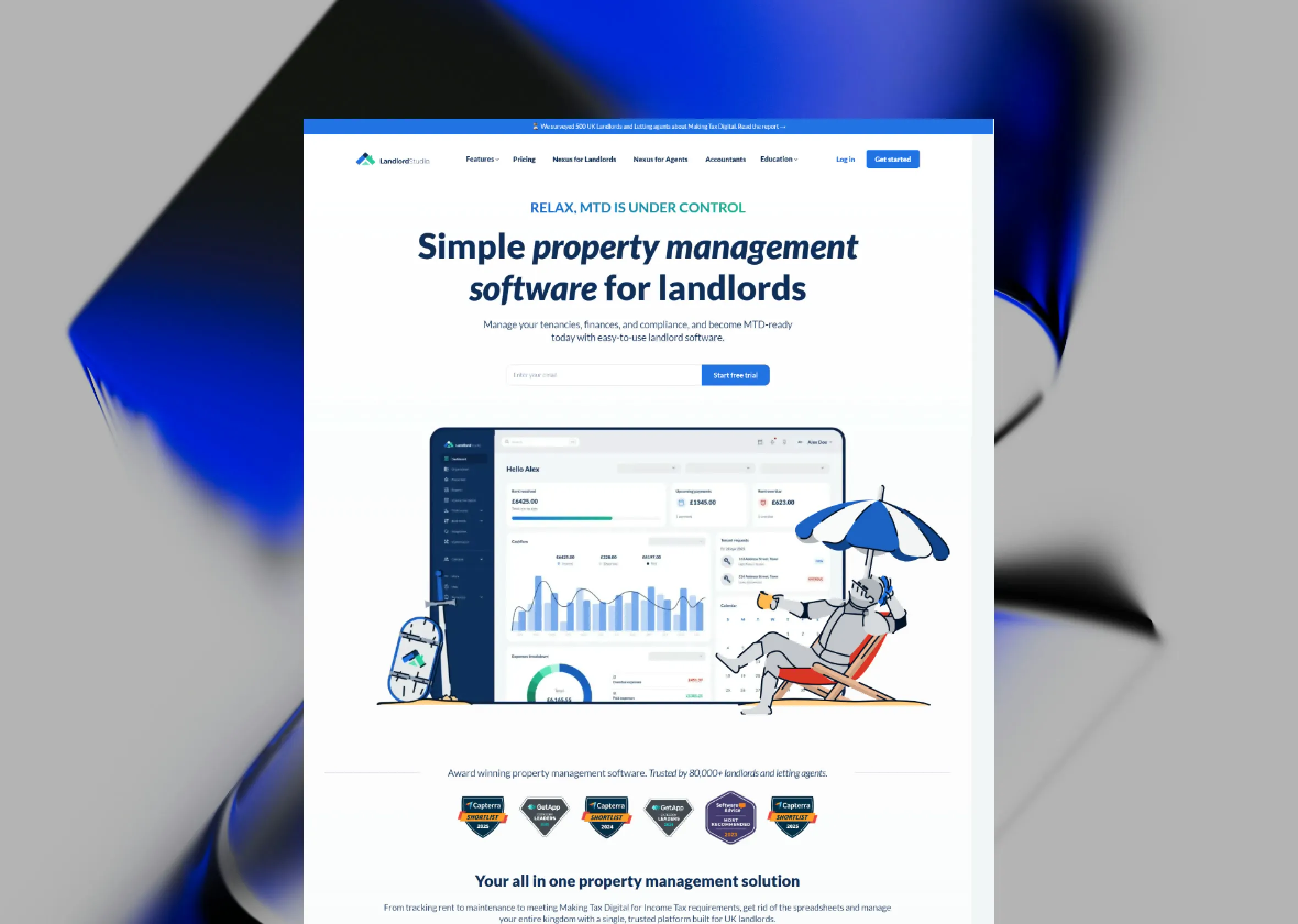
  • The Landlord Studio home page: "Simple property management software for landlords." Landlord Studio: one system for two markets, run by their marketing teamProperty management software for landlords in the US and UK. A five-year-old Webflow build redesigned, migrated onto a component-driven framework, and handed to a marketing team that now builds its own pages with AI.Read more
Signal Studio
Book a Discovery call
MIGRATE.MD MIGRATE

# Migrations


Move your marketing site off Webflow, WordPress, Framer, Wix or a headless CMS and onto code you own. Design kept, rankings protected, run by your team.


// Migrations

## Move your site onto code you own


Your design kept, your rankings protected, and a site your team runs with its own agent on the other side. We lift marketing sites off rented platforms and into your own repository, and your current site stays live until the new one takes over.


- [Book a Discovery call](/contact/)

// From where

## Where are you moving from?


- [Webflow](/migrate/webflow/)

Webflow got you here, and it was a fair trade when you made it.


Site builder


- [Framer](/migrate/framer/)

Framer got your site live faster than anything else could have, and that was the right trade.


- [WordPress](/migrate/wordpress/)

WordPress runs more of the web than anything else because it earned it, and it probably earned your site too.


CMS


- [Wix](/migrate/wix/)

Wix got you online when being online was the whole job, and that was the right call.


- [Squarespace](/migrate/squarespace/)

Squarespace gave you a good-looking site without a designer or a developer, and that was the right call.


- [Sanity](/migrate/sanity/)

You chose Sanity because structured content is the right way to build, and it is.


Headless CMS


- [Contentful](/migrate/contentful/)

Contentful was built for serious content operations, and choosing it was a serious decision.


- [Strapi](/migrate/strapi/)

Self-hosted already, and one step from the code and content living together.


- [Something else?](/contact/)

Custom stacks, legacy CMSs, half-finished rebuilds. We have inherited stranger.


Custom


// Who it’s for

## Your team made the jump to AI. Your platform is holding the website back.


The platforms did their job. They let a marketing team run a site without developers, and for a long time that was the best trade on offer. Three things have changed it.


- Your agent is a guest, not an editor.

Platforms were built for a marketer clicking around a visual editor. Your agent doesn’t work that way. It wants to read the files and change them. An MCP or an API lets it reach in, but it’s an agent working through a keyhole: it can’t see the whole site, can’t run it, can’t check its own work before it ships.


- The bill grows with the team.

Seats, plan tiers and item limits mean the cost of shipping climbs with every marketer you add. On code you own it stays flat.


- Leaving gets harder every year you wait.

Every page built inside a platform is a page that has to be carried out of it. The move is at its smallest today.


// What’s included

## The same care, whatever the platform.


- Rankings protected.

A per-URL redirect plan, metadata carried over, and rankings watched through cutover. Moving platforms doesn’t have to mean starting over with search engines, and we treat every ranking as something you paid for.


- Design largely kept.

A migration is not a redesign. What you’ve invested in comes with you, rebuilt as a component library. Everything underneath it is replaced.


- Cutover with a net.

Staged on a preview, switched over with the redirects live and a rollback ready. Your current site keeps running until the moment the new one takes over, and moving off a platform doesn’t mean a publishing freeze.


- The full system on the other side.

Every migration lands on the same foundation as a new build: the keys to your own GitHub repository, your agent shipping changes on a preview, your brand encoded, our standards in the rails, the machine layer, and your team trained to run it.


- Discovery

- Transform

- Run & grow


// The CMS question

## Do you have to leave your CMS?


No. The non-negotiable in a migration is ownership: the code and the content, in your repository, under your name. Where the content is edited is a choice inside that.

Our default, and what we recommend for most marketing sites, is content in the repository next to the code. The repo is the CMS. It is what lets your agent work on the whole site, and it means no CMS subscription: no seats, no content held in a vendor’s system, nothing between your agent and your words.

But some teams genuinely suit a headless CMS on the same foundation: some people live in their agents and others want a familiar editor, an editorial team publishes most days, or you publish across languages or markets. Then editors publish through the CMS, the marketers working with agents work through the repo, and it’s still one site with one set of rules. Sometimes the right move is keeping your content exactly where it is while we rebuild what’s underneath it.


- [Agentic websites](/services/agentic-websites/)

- [Headless CMS](/services/headless-cms/)

repo-slab


// Recent work

## Built for SaaS teams like yours.


- [Autohive: a website that keeps pace with their marketing team](/case-studies/autohive/)

An AI-agent company's first website, built on a component framework their designers, marketers and agents could all work in, so their marketing team builds its own landing pages and updates without waiting on anyone.


- [Future of Marketing Work: a brand and website for a three-way event](/case-studies/future-of-marketing/)

An Auckland event on how marketers adapt to digital transformation and AI, brought together by a university, the AI community and an events group. We made the brand, the website and the print.


- [Landlord Studio: one system for two markets, run by their marketing team](/case-studies/landlord-studio/)

Property management software for landlords in the US and UK. A five-year-old Webflow build redesigned, migrated onto a component-driven framework, and handed to a marketing team that now builds its own pages with AI.